Cooking separate meals can feel like the easiest option in the moment.
You know they’ll eat it, it avoids conflict, and dinner gets done quickly.
But over time, it tends to create more work, not less.
And it separates children from the way the family eats.
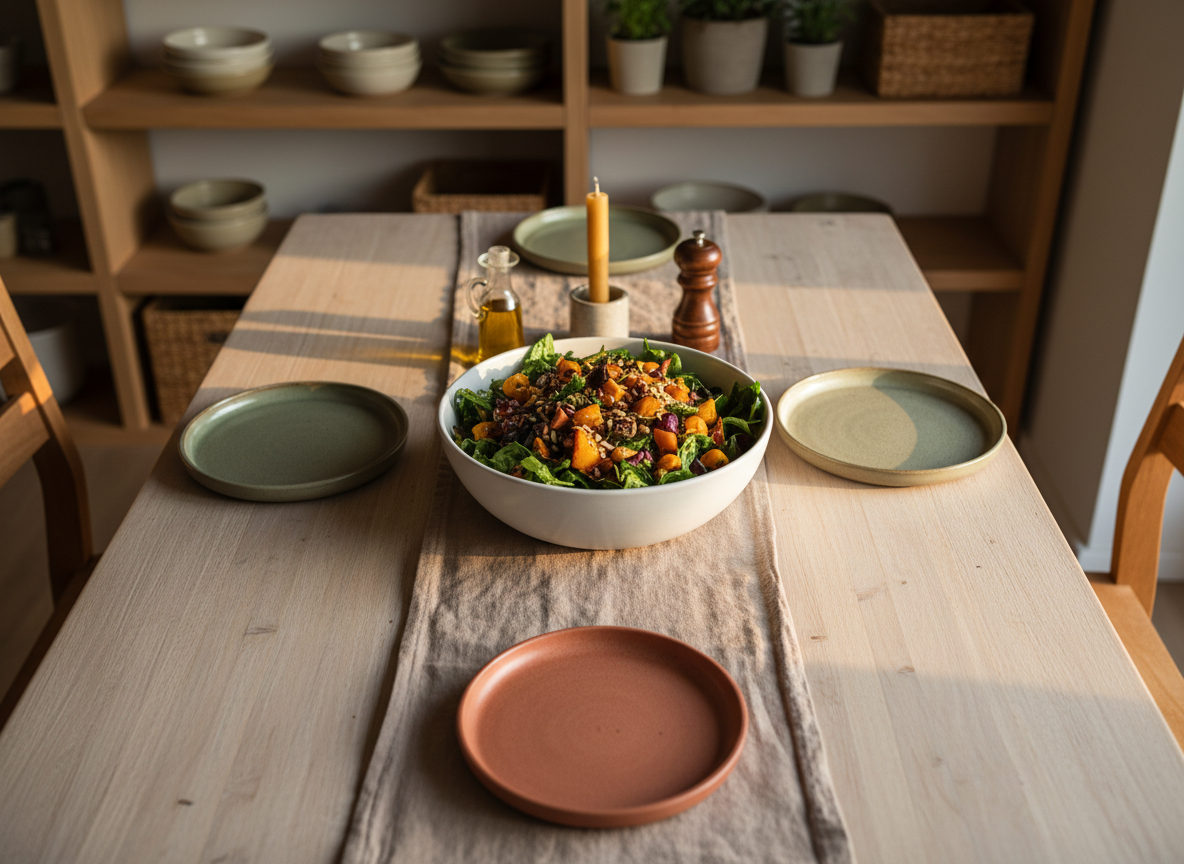
In our home, everyone eats the same meal.
Not because they always love it, but because it’s what’s served.
There’s no expectation that they eat everything.
But there is consistency in what is offered.
From what I’ve observed, children learn to eat a wider range of food through exposure, not pressure.
Seeing the same food regularly, in a relaxed environment, makes a difference over time.
The 4pm vegetable platter helps with this as well.
They’re already coming into dinner less hungry and more open.
It also simplifies things for you.
You’re cooking one meal, not thinking about multiple options, and not negotiating at the table.
We focus more on how the meal is presented.
Making sure there’s:
- something familiar
- something fresh
- something filling
Over time, this creates a rhythm where food is just part of the day, not a point of tension.
This doesn’t mean every meal is eaten perfectly.
Some days are better than others.
But in our experience, keeping things consistent and simple works far better than constantly adjusting around preferences.
And eventually, children grow into the way you eat—rather than the other way around.
Leave a Reply