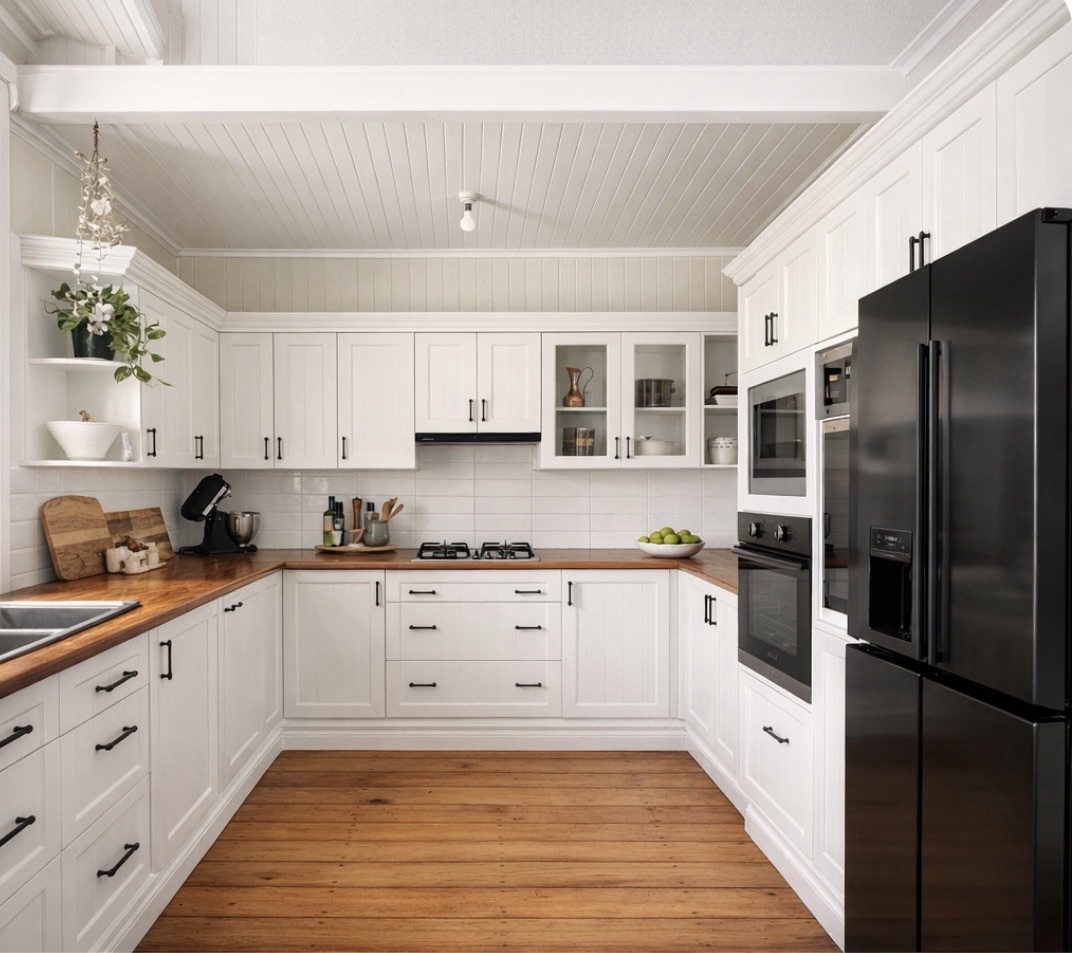
How the day is structured shapes how your home feels
INTRODUCTION
A calm home is often thought to come from routines.
Set times.
Structured days.
Everything planned and followed through.
But in practice, rigid routines rarely hold.
They become something to maintain, rather than something that supports the home.
What tends to work better is a rhythm.
Something looser, but consistent.
A way of moving through the day that reduces friction rather than adding to it.
A calm home is shaped by how the day flows.
WHY ROUTINES OFTEN DON’T WORK
Most routines are built around control.
Trying to fit everything into place, often against the reality of the day.
When something shifts, the whole structure starts to feel off.
And instead of creating calm, it creates pressure.
A rhythm is different.
It allows the day to move, while still holding a sense of consistency.
WHAT A RHYTHM ACTUALLY DOES
A rhythm doesn’t organise every hour.
It anchors the day.
It creates a natural order so that:
- fewer decisions are needed
- transitions feel smoother
- the home doesn’t need constant managing
It’s not about doing more.
It’s about removing what disrupts the flow.
THE STRUCTURE OF A CALM DAY
Rather than a strict routine, a calm home tends to follow a simple structure.
MORNING — BEGINNING STEADILY
The tone of the day is set early.
Not through productivity, but through how the morning feels.
- light comes in gradually
- the space is reset from the night before
- breakfast is simple, but done beautifully
Children are part of this.
Not separate, not entertained — simply present within it.
The aim is not to rush into the day, but to begin it steadily.
MIDDAY — SHARED LIFE
This is where most of the day happens.
Rather than filling it with activities, the focus stays on:
- shared spaces
- shared meals
- simple tasks done together
Food is part of the rhythm, not something separate.
Children are included where possible:
- helping prepare food
- being near, rather than elsewhere
- learning through what’s already happening
This removes the need to constantly create something new.
AFTERNOON — KEEPING IT LIGHT
This is where many homes start to feel stretched.
Energy drops.
More gets introduced to fill the time.
A calmer approach is to keep this part of the day lighter.
- fewer transitions
- less added stimulation
- allowing space for rest or slower movement
Nothing additional needs to be created here.
EVENING — SHIFTING THE HOME
The evening is where the home changes.
Not through a long routine, but through a shift in environment.
- lights are lowered
- the space becomes more contained
- the day begins to close
Dinner is shared.
Not rushed, not separate — part of the home settling.
Afterwards, small resets happen naturally.
Not a full clean, just enough for the home to feel ready for the next day.
WHAT MAKES THIS WORK
A rhythm works because it reduces what needs to be managed.
There are fewer decisions throughout the day.
Fewer separate parts to coordinate.
More sense that life is happening within the home, rather than being organised around it.
It allows the home to feel steady, even when the day isn’t perfect.
YOU DON’T NEED A PERFECT ROUTINE
The aim isn’t to follow this exactly.
It’s to recognise the structure underneath it.
A calm home doesn’t come from getting everything right.
It comes from:
- fewer competing demands
- more shared moments
- a steadier pace across the day
A DIFFERENT WAY TO MOVE THROUGH THE DAY
When the day is structured this way, the home begins to feel different.
Less rushed.
Less managed.
More settled.
Not because more has been added.
But because less is working against it.
IF YOU WANT TO TAKE THIS FURTHER
If you want to apply this more fully across your home,
The Calm, Beautiful Home expands on this approach —
showing how to shape both the home and the day so they support each other.
If you’re navigating this with children,
Raising Children in a Slow Living Home explores how they fit naturally within this rhythm.
Leave a Reply