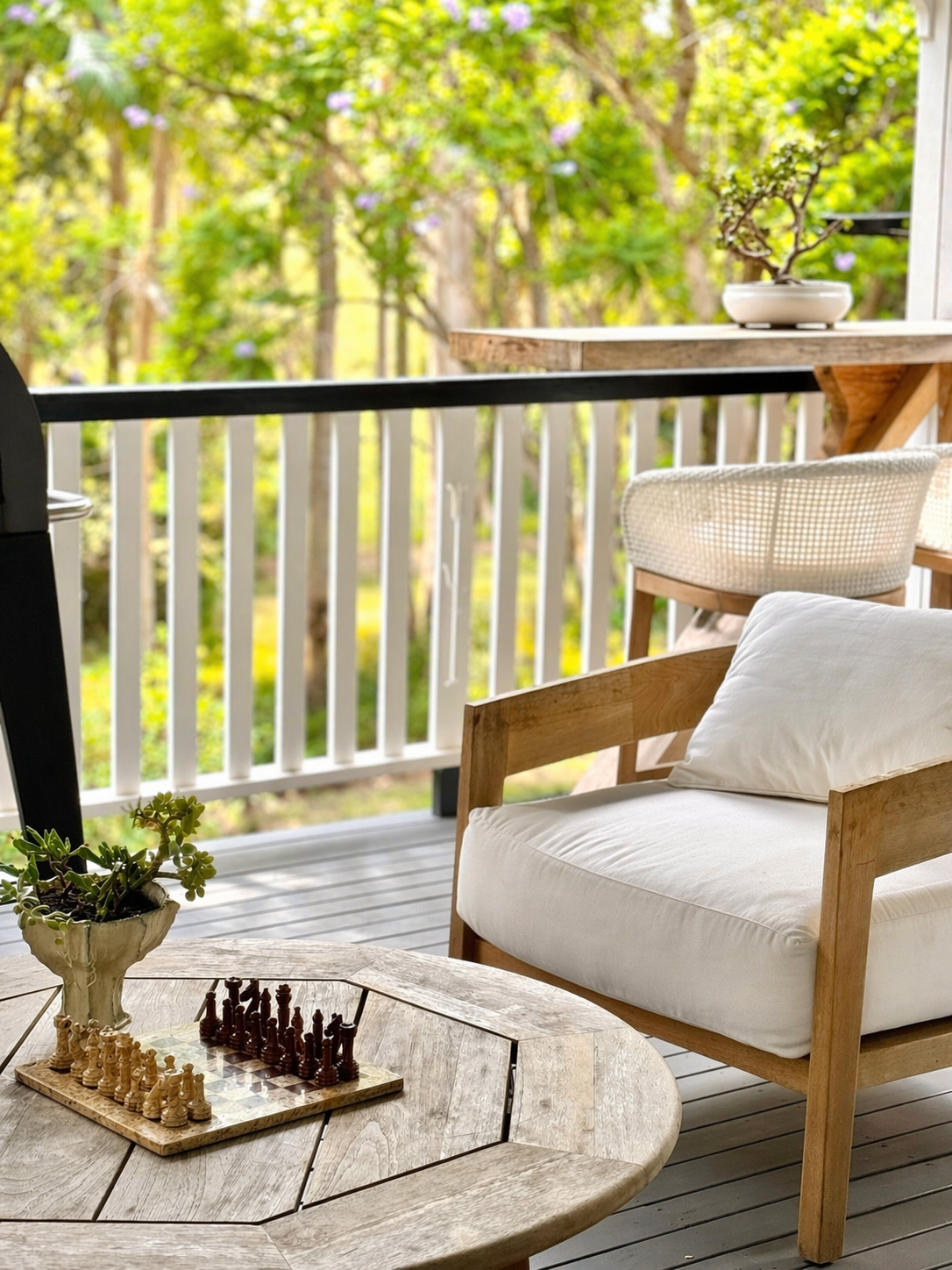
Why a calm home isn’t created through effort — but through how it’s lived in
A calm home is often mistaken for something that requires more effort.
INTRODUCTION
More organising.
More routines.
More systems to keep everything in place.
But in reality, most homes don’t feel unsettled because too little is being done.
They feel that way because too much has been added.
More things.
More separation.
More to manage across the day.
A calm home doesn’t come from doing more.
It comes from how the home is approached, and how daily life happens within it.
WHERE IT STARTS TO SHIFT
The change is usually gradual.
A few more things come into the space.
Different parts of the day become more separated.
Meals, play, and routines begin to happen in different places, at different times.
None of it feels significant on its own.
But over time, the home starts to feel less settled.
Not because anything is wrong, but because the way it’s being lived in has changed.
CALM COMES FROM REDUCTION, NOT EFFORT
There is often an assumption that a calm home requires more structure.
In practice, the opposite tends to work better.
Reducing what competes for attention changes the feeling of a home immediately.
Fewer things within the space.
Fewer decisions throughout the day.
Fewer transitions between one activity and the next.
This isn’t about removing everything.
It’s about allowing the home to feel clearer, and easier to move within.
KEEP THE HOME AS ONE SPACE
One of the biggest shifts happens when the home is no longer divided into separate worlds.
When different parts of life are constantly split —
children here, adults there, meals separate, spaces assigned —
everything becomes more complicated to manage.
A calmer approach is to bring things back together.
Shared spaces.
Shared meals.
A sense that life is happening in one place, rather than being divided across many.
This reduces movement, decisions, and friction throughout the day.
CHILDREN DON’T NEED A SEPARATE VERSION OF THE HOME
A common assumption is that children need something entirely different.
More entertainment.
More dedicated space.
More to keep them occupied.
But often, what works better is the opposite.
Children being part of what is already happening:
- helping prepare meals
- being nearby rather than separate
- learning to exist within the same spaces
This doesn’t add more to the day.
It simplifies it.
If this is something you’re navigating, you can read more in
Raising Children in a Slow Living Home, where this is explored in more detail.
THE FEELING OF THE HOME MATTERS
A calm home is not defined by how little is in it.
It’s defined by how it feels to be in.
Light that is softer in the evening.
Spaces that are not competing for attention.
Surfaces that are clear enough to rest the eye.
These are small shifts, but they change the entire experience of the home.
YOU DON’T NEED TO DO MORE
Most approaches to creating a calm home focus on adding something.
More structure.
More effort.
More systems.
But often, what makes the biggest difference is stepping back.
Removing what isn’t needed.
Reducing what interrupts the flow of the day.
Allowing the home to support you, rather than something you are constantly managing.
A DIFFERENT WAY TO APPROACH YOUR HOME
A calm home is not something separate from everyday life.
It’s created within it.
Through how meals are shared.
How spaces are used.
How much is allowed into the home in the first place.
Nothing about this requires more time.
Only a different approach.
IF YOU WANT TO TAKE THIS FURTHER
If you want to apply this more fully across your home,
The Calm, Beautiful Home expands on this approach in a structured way —
covering how to shape your home so it feels calm, considered, and works in everyday life.
Leave a Reply